June 28, 2014
Dear Readers,
I have launched a new blog called wine-chronicles.com. Connections to Wine will continue to exist for the time being on the Internet, but static. To consult my new wine blogging, please go to http://www.wine-chronicles.com.
Thanks,
Panos
February 9, 2014
 23 to 25 March 2014 will see ProWein 2014 open its doors again in Düsseldorf. Some 4,700 exhibitors from 50 countries will be presenting wines and spirits from throughout the world. The comprehensive ranges on display will be complemented by an equally diverse programme of events.
It all started 20 years ago, and today ProWein is billed by organizers’ as the world’s leading trade fair for business with international wines and spirits.
In any case, the number of exhibitors is 15 times higher than at the first event, 30 times more visitors come to the fair, the number of participating countries is 6 times higher, the occupied space 18 times larger. Just compare this year’s upcoming event with news from the first press release.
In spite of the cheesy song commemorating the anniversary – HERE – Düsseldorf comes alive with wine in late March, with a festive and fun ambiance. Well worth the experience for anyone working in the wine industry or industries related to it.
Click on THIS LINK for a very informative video on the event.
Hope to see you there!
More information, from the organizers’:
From guided introductions to the new vintages and background information on particular grape varieties, wine-growing regions and styles to forecasts about future wine markets and trends – the spectrum of events accompanying ProWein is wide and varied. The line-up of speakers includes award-winning sommeliers, international expert journalists as well as leading specialists in the sector.
Most of the over 300 tastings and lectures organised by exhibitors will take place right at the exhibition stands; in addition to this, the ProWein Forum in Hall 7.1 will be serving up a varied programme. In line with the anniversary of ProWein the German Wine Institute (DWI) will extend an invitation to a tasting entitled “20 Years of ProWein – 20 German Vintages” hosted by Stuart Pigott. At the same location best-practice examples and successful retail concepts will be centre stage later on in the seminar organised by the German trade magazine “Wein + Markt”.
All Facets of Continuous Education
In themed tastings numerous exhibitors will shed light on the country-specific characteristics of their wines and spirits. For instance, Shigekazu Misawa from multiple award-winning wine estate Grace, who will present the tradition-rich Koshu wine for the first time at ProWein or the California Wine Institute inviting visitors to a “California Road Trip”. Generally valid principles for such questions as wine and food matches or blind tastings will be explained at the seminars organised by the “Wine & Spirit Education Trust (WSET)”, for example. Wine prices, on the other hand, will be in the foreground at the events of USA Wine West, LLC (“Wine Exports to the United States: How much do your 3-Euro Wines cost for US Consumers?) and at the Italian ICE Institute (wines in the EUR 10.00 price range and above).
There are also interesting offers in the spirits segment: under the heading “Stirred – Not Shaken” the distillery Hubertus Vallendar will present so-called Signature Drinks, which were specifically created for – and with – this company’s own distillates while Distillerie Tessendier & Fils invites visitors to mix their own drinks in a creative Cocktail Workshop.
A glance into the future will be provided by “Vision 2034”, the panel discussion organised by ProWein and the British market research institute Wine Intelligence. Discussions will focus on five theses on the development of the wine sector through to 2034. Those theses resulted from a global market survey that ProWein commissioned on the occasion of its 20th anniversary. Another seminar also held by Wine Intelligence later that same day will discuss growth potential in 2014.
Awards and Prizes
ProWein exhibitors have numerous award-winning wines and spirits in their portfolios but there will also be several award-giving ceremonies right at the exhibition centre. Among others, the DWI will honour Germany’s “Best Wine Gastronomies”. A highlight boasting international flair is the grand finale of the Winestars World contest, held on Monday at the ProWein-Forum. Here high-calibre buyers from various countries will judge the submitted international wines live and select potential suppliers.
Continuous Special Shows
As a complement to the many exhibitor events, ProWein also offers several Special Shows definitely worth a visit: the central Tasting Zone in Hall 2 organised in cooperation with the trade magazine “Weinwirtschaft” from the Meininger publishing house will this year come under the heading “Premium Wines” while the FIZZZ-Lounge in the spirits hall 7a will present high-octane “Garden Drinks” (combining spirits with fresh vegetable juices). In Hall 7.1 the Special Show “wine’s best friends” will again focalise high-end fine foods that form a special complement to wines and spirits. Both specialist retailers and restaurateurs will find valuable inspirations here.
April 18, 2014
By Panos Kakaviatos
Greetings wine lovers. You may have noticed that I am posting less on Connections to Wine. I plan to launch a new website, Wine-Chronicles.com, in the near future.
Meantime, I have posted reflections on barrel samples from the 2013 en primeur tastings and you can find these notes and thoughts on the three links below, as published in the UK wine industry publication Harpers Wine & Spirit:
Choose Whites over Reds: http://www.harpers.co.uk/opinion/bordeaux-2013-choose-whites-over-reds/356331.article
The Left Bank: http://www.harpers.co.uk/opinion/bordeaux-2013-the-left-bank/356334.article
The Right Bank: http://www.harpers.co.uk/opinion/bordeaux-2013-the-right-bank/356376.article
In the meantime, as prices are being released, my advice to readers would be to cautiously purchase first growths, as they may be interesting for your investment. The quality is there, too, but – caution – I see too many writers/tasters posting scores from the mid to upper 90s. Sheesh, 2013 includes some surprisingly good reds, but none are really great. No matter what spin you hear, about the difficulty of the vintage and massively reduced yields, of only getting the best possible grapes. Folks, almost everything went wrong for the reds in 2013. No amount of concentration machines, sorting machines or chaptilisation will compensate for that.
In a recent article from the French language Terre de Vins magazine, the editors note that some chateaux are pricing their en primeur at slightly lower prices than they did in 2012. 2012 is arguably a better vintage – and certainly a better vintage for Pomerol. In fact, 2012 is a very good vintage for Pomerol. 2013 is not a very good vintage for ANY red appellation in Bordeaux. You may find more consistency in some regions, but none of the wines stand out as particularly great.
With that in mind, why the heck should end consumers tie money down for 2 to 3 years when you can get a vintage that is arguably better – in some cases much better – than 2013 and in bottle today?
Yes, I am writing about the 2008 vintage.
What I have done is taken some of the wines listed in the Terre de Vins article and compared the prices to today’s 2008 prices, taxes included. For that is what matters to you, the consumer.
There are some wines in 2013 whose prices are quite interesting, and that would include the first growths that have thus far been released. A few others include wines like Chateau Canon in Saint Emilion and Du Tertre in Margaux and Lynch Bages in Pauillac, but for the most part… forget about it.
I have highlighted in red those 2013 release prices that are not bad. But overall, it is clear to me that you are more intellegent in buying 2008 in bottle than holding on to futures whose prices will not budge by the time you can get them off the shelves.
Most of the 2013s will be about the same price on the shelves when they are released in bottle. Certainly the massive foires au vins in France will be selling them in droves for about the price you would pay now. So why bother?
On the other hand, I would seek out any special bottle sizes for the whites, both sweet and dry. As I have written before, in Harpers, 2013 is a very good vintage for both dry whites and Sauternes/Barsac.
Comparing release prices of Bordeaux in 2013 and tax-included prices of 2008 (in red, possible buys)
Château Beychevelle – Saint-Julien 2013 : 44 € HT (2012 : 48 € HT) price 2008 now with tax = €50
Château Chasse-Spleen – Moulis 2013 : 19,10 € HT (2012 : 21 € HT) price 2008 now with tax = €22
Château Poujeaux – Moulis 2013 : 18,20 € HT (2012 : 19 € HT) price 2008 now with tax = €20
Château Giscours – Margaux 2013 : 28,10 € HT (2012 : 31,50 € HT) price 2008 now with tax = €35
Château Pontet-Canet – Pauillac 2013 : 67,40 € HT (2012 : 71 € HT) price 2008 now with tax = €72
Château Gloria – Saint-Julien 2013 : 21,45 € HT (2012 : 24 € HT) price 2008 now with tax = €25
Château Labégorce – Margaux 2013 : 15,50 € HT (2012 : 16,50 € HT) price 2008 now with tax = €23
Château Batailley – Pauillac 2013 : 29 € HT (2012 : nc) price 2008 now with tax = €34
Château Pichon-Longueville Baron – Pauillac 2013 : 60 € HT (2012 : nc) price 2008 now with tax = €70
Château Lynch-Bages – Pauillac 2013 : 57,50 € HT (2012 : 71 €) price 2008 now with tax = €90
Château Cos d’Estournel – Saint-Estèphe 2013 : 90 € HT (2012 : 98 € HT) price 2008 now with tax = €95
Château Petit Village – Pomerol 2013 : 41 € HT (2012 : 44 € HT) price 2008 now with tax = €40
Château Rauzan-Ségla – Margaux 2013 : 38 € HT (2012 : 44 € HT) price 2008 now with tax = €50
Château Prieuré-Lichine – Margaux 2013 : 24 € HT (2012 : 28 € HT) price 2008 now with tax = €35
Château du Tertre – Margaux 2013 : 20,95 € HT (2012 : 22,50 € HT) price 2008 now with tax = €28
Château Siran – Margaux 2013 : 15,80 € HT (2012 : 15,90 € HT) price 2008 now with tax = €24
Château Lagrange – Saint-Julien 2013 : 26 € HT (2012 : 27,50 HT) price 2008 now with tax = €36
Château Lafite-Rothschild – Pauillac 2013 : 330 € HT (2012 : 395 € HT) price 2008 now with tax = €575
Carruades de Lafite – Pauillac 2013 : 99 € HT (2012 : 109 € HT) price 2008 now with tax = €150
Château Mouton-Rothschild – Pauillac 2013 : 250 € HT (2012 : 299 € HT) price 2008 now with tax = €340
Château Duhart-Milon – Pauillac 2013 : 54 € HT (2012 : 61 € HT) price 2008 now with tax = €58
Château d’Armailhac – Pauillac 2013 : 26,80 € HT (2012 : 30,50 € HT) price 2008 now with tax = €41
Château Haut-Bages Libéral – Pauillac 2013 : 22,30 € HT (2012 : 24 € HT) price 2008 now with tax = €30
Château Clerc-Milon – Pauillac 2013 : 35,30 € (2012 : 37 € HT) price 2008 now with tax = €42
Château Montrose – Saint-Estèphe 2013 : 64 € HT (2012 : 66 € HT) price 2008 now with tax = €73
Château Calon-Ségur – Saint-Estèphe 2013 : 42 € HT (2012 : 45,50 € HT) price 2008 now with tax = €50
Château Ormes de Pez – Saint-Estèphe 2013 : 17,90 € HT (2012 : 20 € HT) price 2008 now with tax = €21
Château La Tour Carnet – Haut-Médoc 2013 : 20,15 € HT (2012 : 21 € HT) price 2008 now with tax = €26
Château L’Evangile – Pomerol 2013 : 115 € HT (2012 : 121 € HT) price 2008 now with tax = €120
Château du Domaine de l’Eglise – Pomerol 2013 : 27 € HT (2012 : 29 € HT) price 2008 now with tax = €35
Château Gazin – Pomerol 2013 : 42 € HT (2012 : 48 € HT) price 2008 now with tax = €55
Château Angélus – Saint-Emilion 2013 : 189 € HT (2012 : 210 € HT) price 2008 now with tax = €190
Château Canon – Saint-Emilion 2013 : 38 € HT (2012 : 43,50 € HT) price 2008 now with tax = €55
Château Trottevieille – Saint-Emilion 2013 : 52 € HT (2012 : 54 € HT) price 2008 now with tax = €50
Château Haut-Bailly – Pessac-Léognan 2013 : 46 € HT (2012 : 50 € HT) price 2008 now with tax = €65
Château Smith Haut Lafitte (rouge) – Pessac-Léognan 2013 : 44 € HT (2012 : 47,50 € HT) price 2008 now with tax = €40
Château Smith Haut Lafitte (blanc) – Pessac-Léognan 2013 : 63 € HT (2012 : nc) price 2008 now with tax = €70
January 23, 2014
In 2013, in Bordeaux, I convinced the recently named general manager Laurent Dufau of Chateau Calon Segur to come to Washington D.C. to present the wines of this famous estate – apparently the oldest in the Medoc.
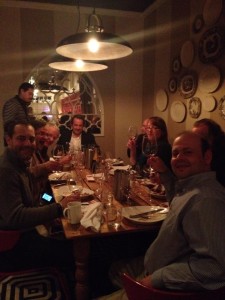
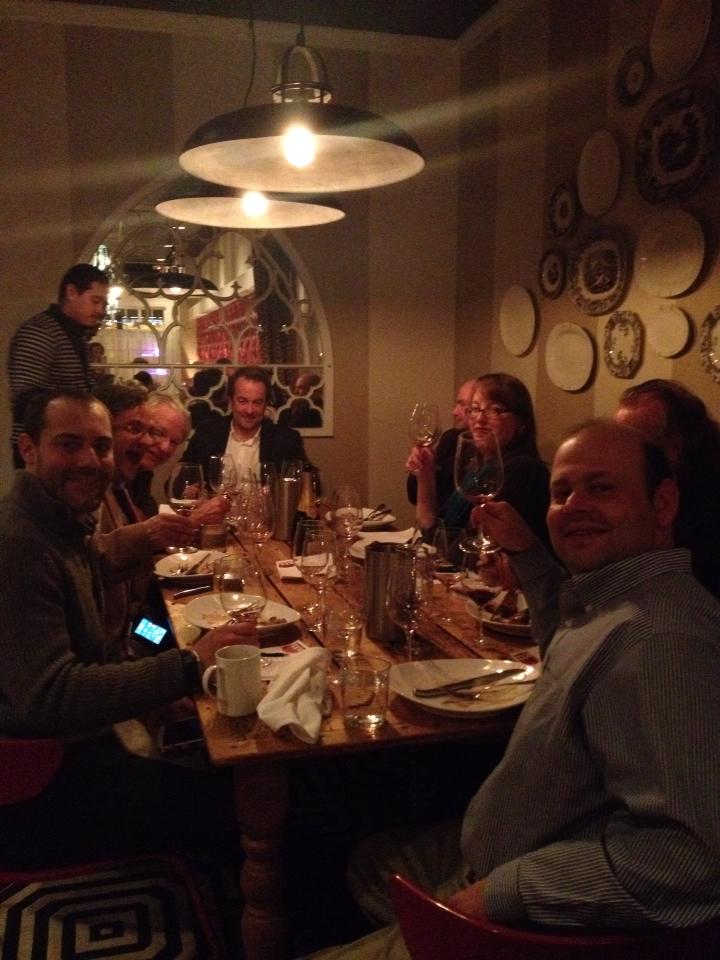
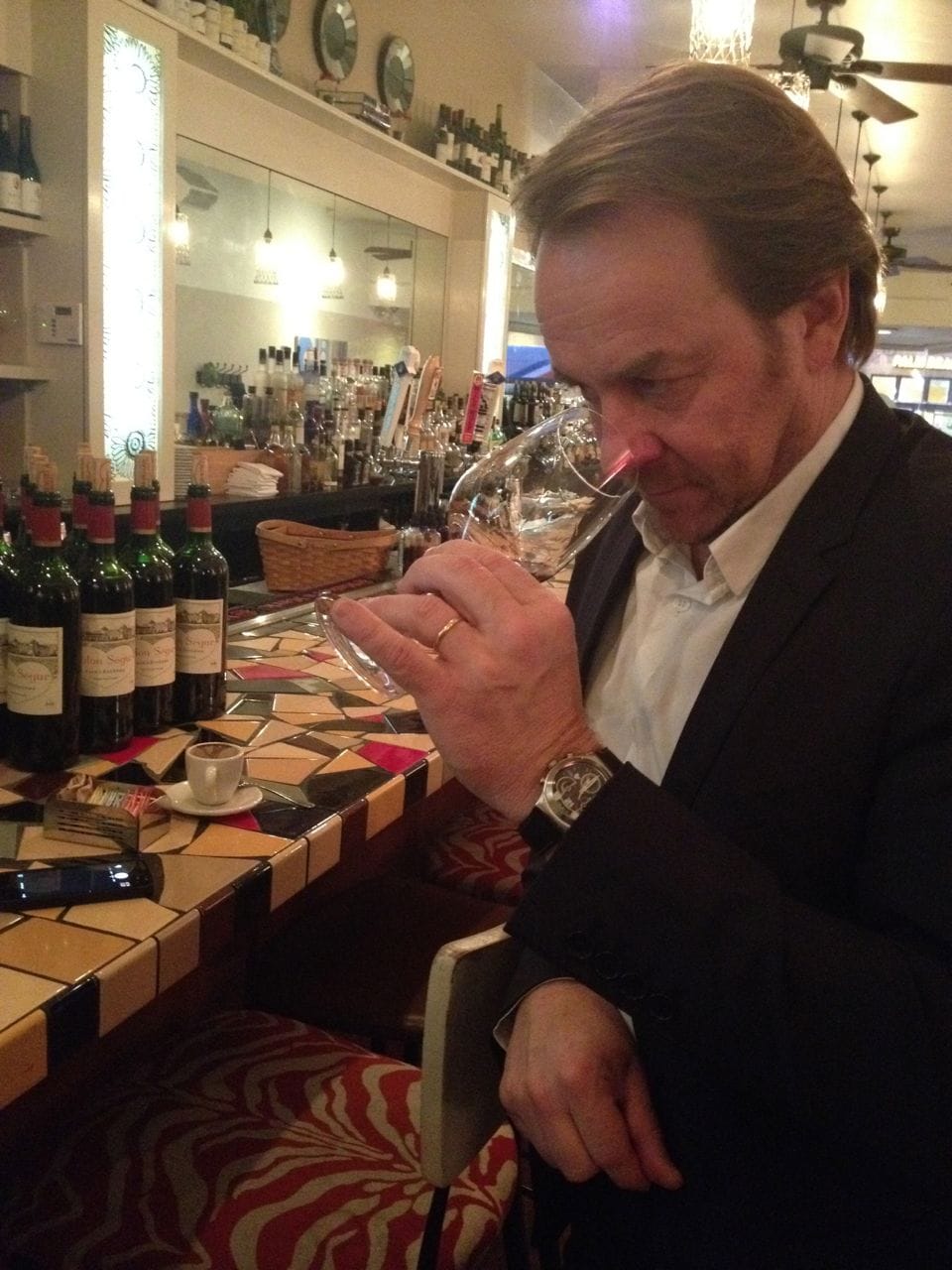
With Laurent Dufau (back of the table), Terroirist blog author David White, Phil Bernstein of MacArthur Wine Importer, critic John Gilman, sommeliers Maria and David Denton
Long considered a hidden jewel, this 3rd Growth from the famous 1855 Classification of the Medoc and Sauternes comes from arguably the least well known Medoc appellation. Most everyone has heard of Pauillac and Saint Julien and Margaux. The first boasts three first growths (Latour, Mouton and Lafite). The latter has an elegant and easy ring to it; its recognition famously augmented by the first growth bearing the appellation’s name. Saint Julien, sandwiched in-between, is filled by super seconds, from Gruaud Larose and Ducru Beaucaillou, to the famous Leoville trio: Barton, Poyferre and Las Cases.
Further to the north, Saint Estephe is mainly known for its two super star seconds in Cos d’Estournel and Montrose and for a slew of excellent cru bourgeois wines such as Haut Marbuzet or Les Ormez de Pez.
But what about Calon Segur?
Up until now, it has been – by far – the most discrete. When Dufau arrived in Washington D.C. from Paris to host a tasting of 16 vintages that I organised for Ripple Restaurant, he said that this was the first such promotional tasting in the US with a chateau representative in a very long time. I asked “Since 20 years?” He replied: “Since 120.”
A bit of history
Less than 50 years since it was named officially a third growth, this estate was acquired by the Capbern Gasqueton family.
Unlike the owners of other estates, the Capbern Gasqueton family shied away from the press. Well into the 20th century, it did not join the UGCB of Bordeaux – and their yearly world tours – and generally did next to nothing to market their brand. Of course, true Bordeaux lovers know Calon Segur. Critics like Robert Parker have praised the estate, which sells well. But it has been a kind of Sleeping Beauty.
I recall calling Madame Denise de Gasqueton, shortly before her death at age 87 in September 2011, to tell her how much I love the wines, and that I wanted to visit, but she seemed aloof. Indeed, she kept herself and the estate very private and was known for her somewhat “irascible” nature, as friend and fellow wine writer Jane Anson wrote for an article in Decanter at the time of her passing.
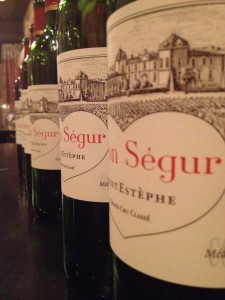
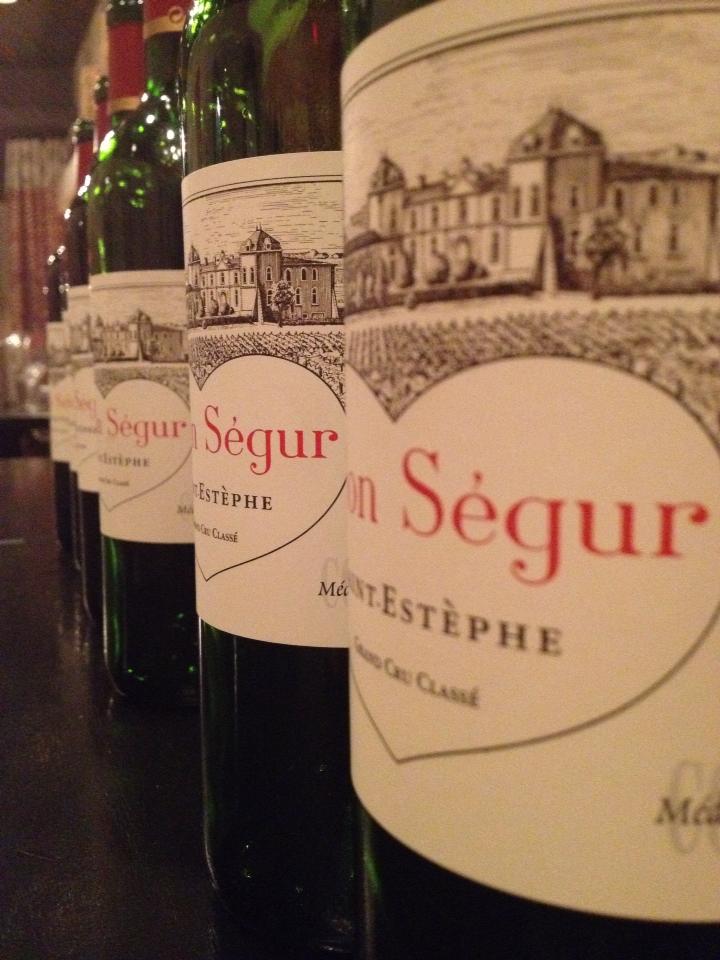
Close up of some of the bottles enjoyed
“She was renowned for turning away journalists and buyers, whatever their status – she was also an attentive owner, and her intelligence and expertise were legendary in the region,” Anson wrote.
FAMOUS QUOTE
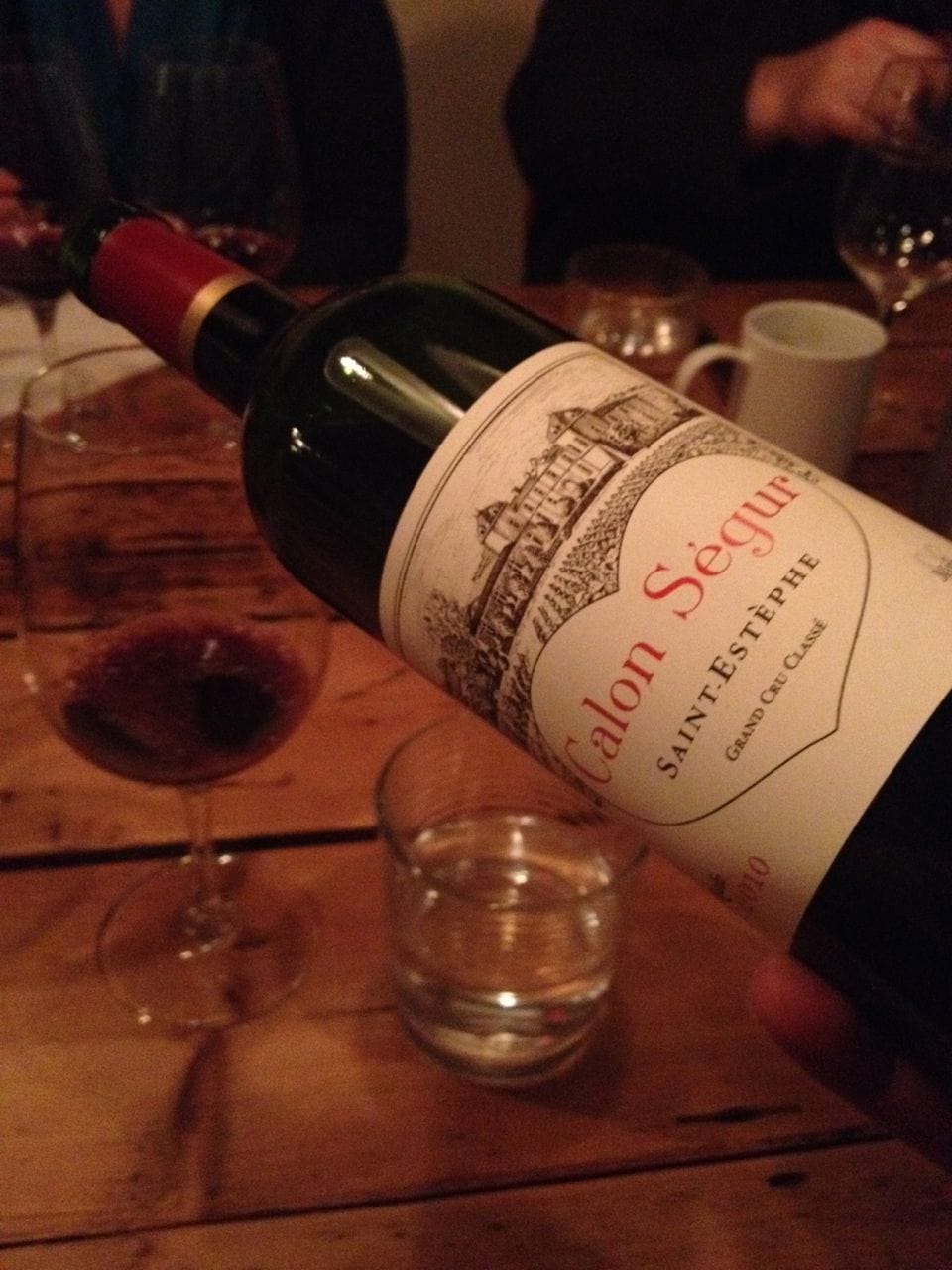
The Marquis de Ségur, former 18th century owner of Lafite, Latour and Mouton, as well as Calon:“I make wine at Lafite and Latour, but my heart is in Calon”. The heart drawn around the chateau’s name on the label today symbolizes that love – and makes for a perfect Valentine’s Day gift for your wine loving sweetheart.
Changes afoot
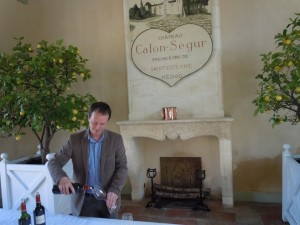
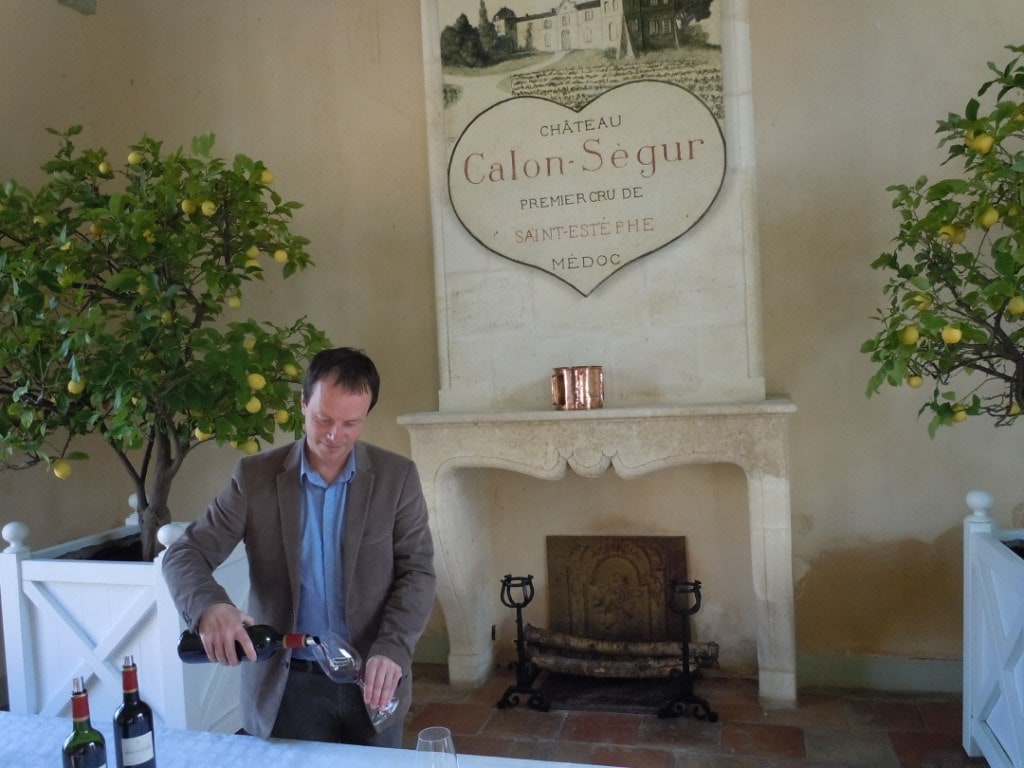
Calon Segur director Vincent Millet pouring delicious samples
After her husband Philippe’s death in September 1995, she took over the running of the estate. And just a few years later, she started to reorganize the vineyard. When the manager of Calon Ségur retired in 2006, Madame de Gasqueton hired Vincent Millet – who had previously been the director of research and development at Chateau Margaux – to take over winemaking. Vincent Millet chose to focus on the 55 hectares of the main vineyard to make Calon Segur. He discontinued using vines from outside the main vineyard for the first wine. He started to increase the percentage of Cabernet Sauvignon, to the point where the average blend in recent years is about 80-20. In 2009, a vintage I adore, he used some 90% Cabernet Sauvignon. He also increased the percentage of new oak to 100%.
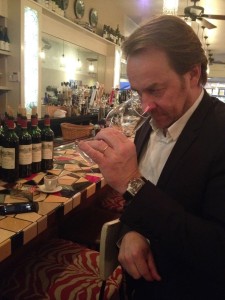
Laurent Dufau sampling some of the wines before the dinner
Changes continued under the new owners following the death of Madame de Gasqueton passed. Her nieces sold their shares of the estate, compelling Helen de Baritault, the daughter of Madame de Gasqueton, to sell it. Crédit Mutuel Arkéa (Suravenir group) and the wine merchant Jean-François Moueix (of Petrus) acquired Calon-Ségur.
The new owners hired Dufau to start promoting the wines. So the vertical and tasting of this estate was a first indeed.
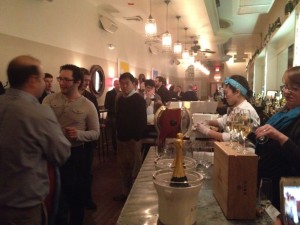
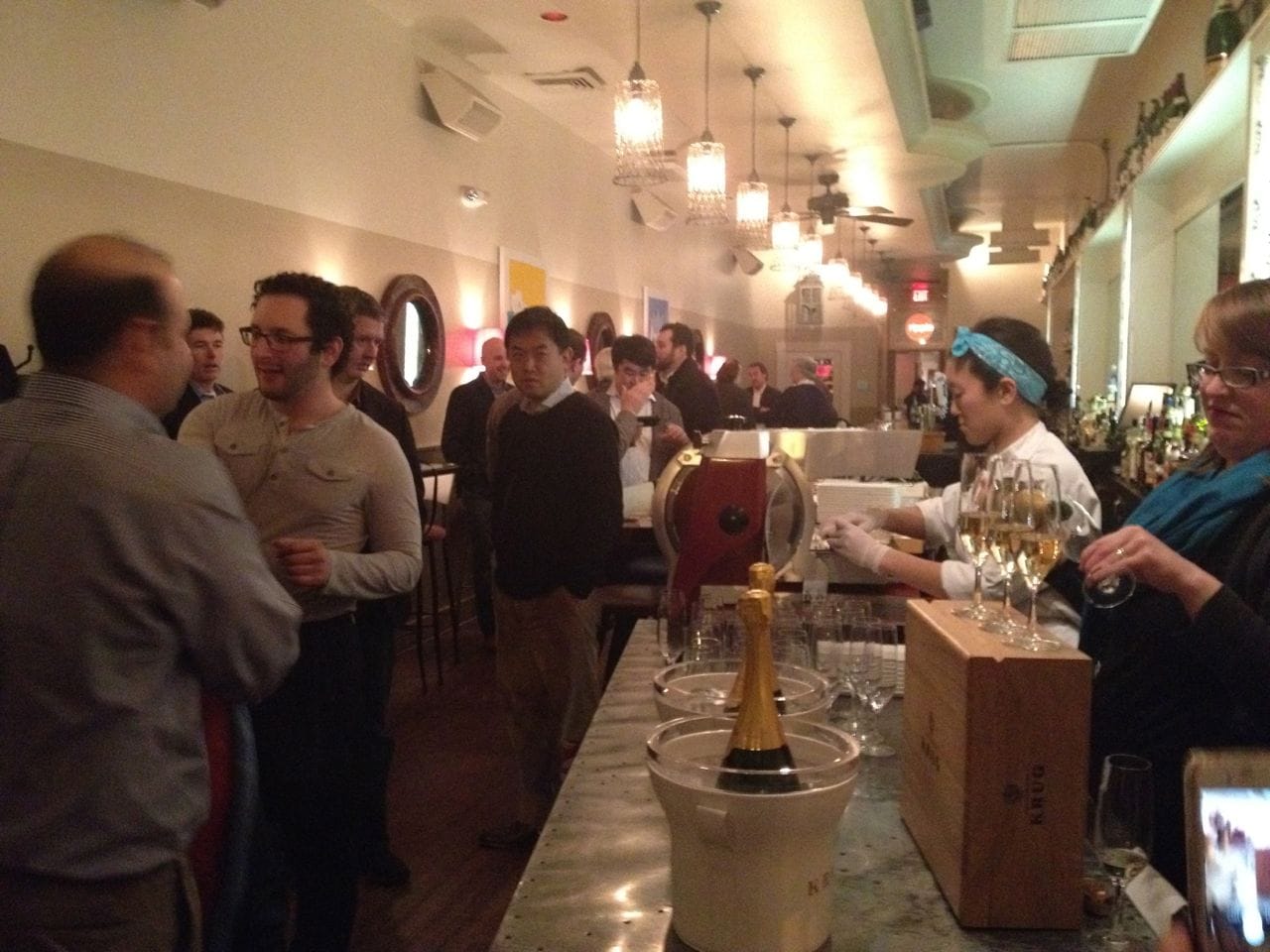
Dinner guests enjoying Krug NV Champagne before dinner
Participants included many wine geeks, professional wine sellers, sommeliers, merchants and restaurateurs. It was fun. And a good learning experience. Important to note that since 2006, the estate has been increasing the density of its vineyard planting and the percentage of Cabernet Sauvignon. Until 2006, the blend included as much as almost 50 percent Merlot. Since that vintage, the average has been closer to 80/20 Cabernet/Merlot. My overall favorite is 2009: a superb vintage that defies the high alcohol trends of Bordeaux and will prove to be something very special in 15-20 years. Please note that tasting notes/scoring reflected matches with the great food at Ripple. For example, the 2007 was just lovely over dinner. I also took vintage character into account, noting that – for a 2007, Calon did well. By the same token, I scored the 2005 less than I should have, perhaps, but I thought it was not as good as the vintage character would lead one to believe.
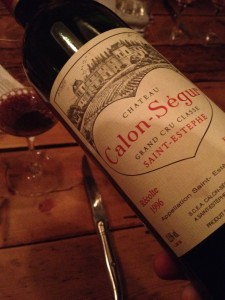
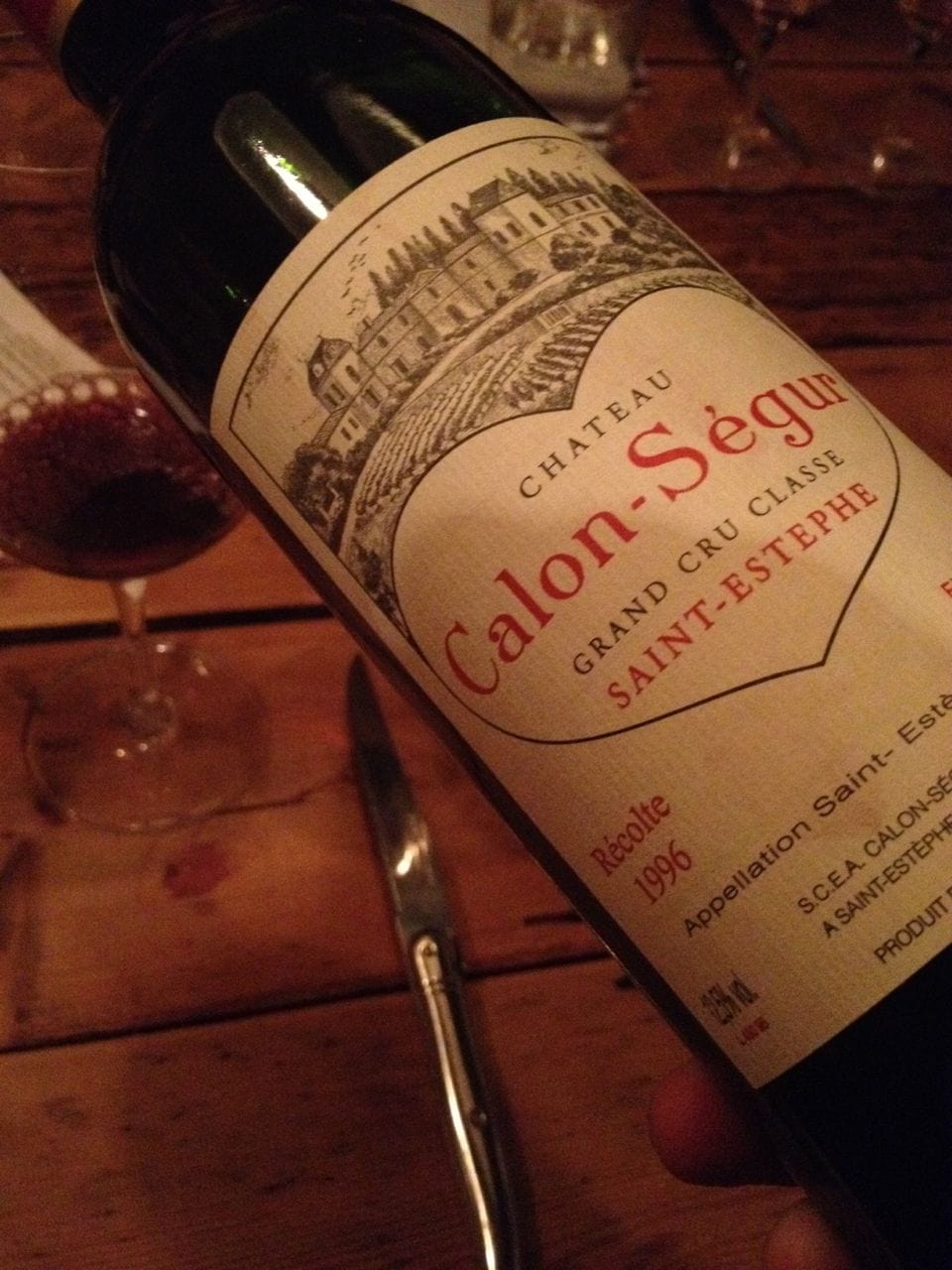
A very popular 1996
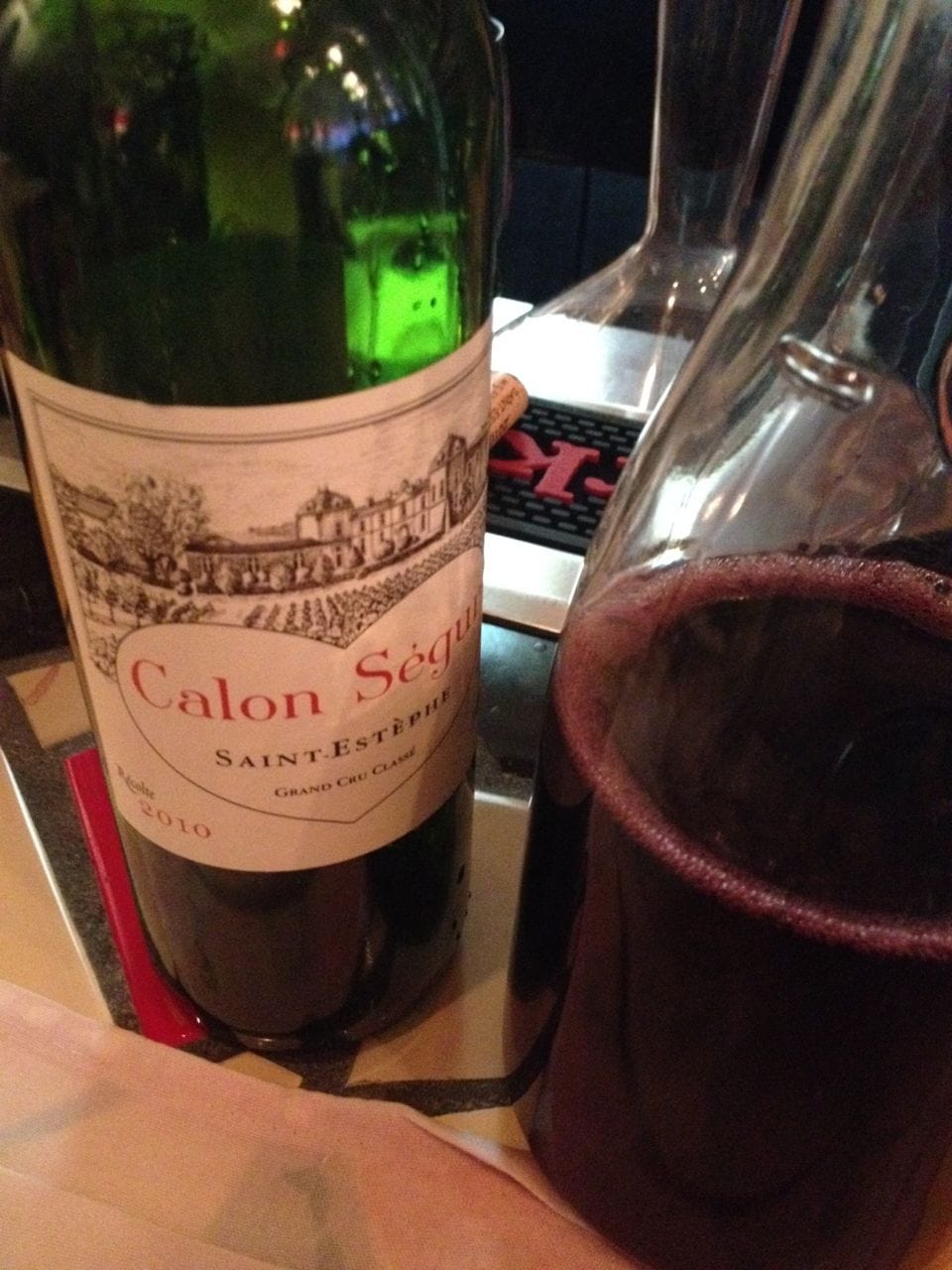
- 2010 Château Calon-Ségur – France, Bordeaux, Médoc, St. Estèphe
When tasted en primeur, I found it a bit too austere but it has tamed itself… And yet, this is a wine that needs lots of time. Several participants at a dinner I organised for Ripple Restaurant in Washington D.C. voted this wine as the best for the future, among 16 vintages. The structure is there, the freshness and the substance. It is not just together yet. Potential for a higher score. (93+ pts.)
- 2009 Château Calon-Ségur – France, Bordeaux, Médoc, St. Estèphe
This is a great bottle of wine. There is sex appeal and structure. The northern Medoc excelled in 2009. While some people believe that 2009 is an all-around positive vintage, let us not forget that this is when Merlot started getting out of hand… Not so in the Medoc, and certainly not at Calon Segur. Some critics ooh and ah over the excessive winemaking at Cos d’Estournel in that year, which comes across as a caricature of winemaking. Here we have 100% new oak, but very well integrated – and 90% Cabernet. This wine should evolve into something special. Montrose is no doubt better, but Calon Segur amounts to less than half the price…. (95 pts.)
- 2008 Château Calon-Ségur – France, Bordeaux, Médoc, St. Estèphe Fine and fresh aromatics. Yet another underrated 2008. Critic John Gilman prefers this over 2010 and 2009. While I would not go that far, this wine offers fine ripeness and excellent verve if not as structured as either 2010 or 2009. But people who dismiss this as not as concentrated may be in for a surprise. There is sneaky persistence on the finish. And plenty of charm! (92 pts.)
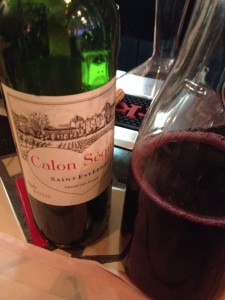
Needs lots of air, but best to wait 20 years before opening this vintage.
- 2007 Château Calon-Ségur – France, Bordeaux, Médoc, St. Estèphe
One of the better 07s from Bordeaux. Very charming and went so well with the dinner. Slight bottle variation. But here we have a wine that is more reflective of the terroir: since around that vintage, the estate started making its wine exclusively from the 55 hectares within the clos of the chateau. And they used more Cabernet: here some 83% Cabernet (as opposed to the virtual 50/50 mix of Cab/Merlot with the 2005). A lovely effort. (90 pts.)
- 2006 Château Calon-Ségur – France, Bordeaux, Médoc, St. Estèphe
Not sure what to think of the 2006. Stolid. Yet solid. No word play  . I recall reporting in September in Bordeaux for decanter.com when the rain fell, and got some savory quotes from Jean Rene Matignon of Pichon Baron basically saying that this was detrimental to optimal ripeness. Laurent Dufau of Calon Segur himself compares 2006 to 1975: “Will it ever come around?” The substance is there, on the mid palate, but it is hardly pleasurable. Gilman is convinced that this will be great down the road. Cross the fingers, but for now, it is not ready. (89 pts.)
- 2005 Château Calon-Ségur – France, Bordeaux, Médoc, St. Estèphe
A rather disappointing 2005. While it was good, it was somewhat Merlot glossy. Not spoofilated like a Pavie of the same vintage, for example, but lacking nuance and complexity. It was pleasing, to be sure. And some tasters ooh and ah over this. But I think it lacked gravitas. Let’s just say that 2006 had too much gravitas, and 2005… not enough. (90 pts.)
- 2003 Château Calon-Ségur – France, Bordeaux, Médoc, St. Estèphe
Cornucopia of aromas and flavors and not cooked or jammy. One of the very best wines from this torrid vintage – and it is no coincidence that Calon Segur is in the northern Medoc. It lacks the substance of the greater mid palates from 2003 (Pichon Baron or Leoville Barton for example) but its charm is appealing. (92 pts.)
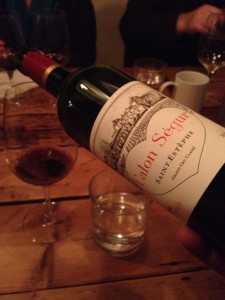
- 2002 Château Calon-Ségur – France, Bordeaux, Médoc, St. Estèphe
I used to love 02s from the Left Bank, but be warned that some seem on a faster evolutionary track than before. There was discussion over 2001/2002, with some tasters saying that the 2002 will outlast 2001. For me, the 2001 – certainly “classic” – has more matiere and I lean towards the view that the 2001 will outlast the 2002, in this case. (89 pts.)
- 2001 Château Calon-Ségur – France, Bordeaux, Médoc, St. Estèphe
Here a solid example of a Medoc 2001 that is provides structure and tannin for the longer haul. While opening 2001s and 2002s before the dinner, I was surprised by the air that 2001 needed. This wine obtained the most votes for wine to be consumed in 10 years. I would agree. The 2009 and 2010 need 20. (91 pts.)
- 2000 Château Calon-Ségur – France, Bordeaux, Médoc, St. Estèphe
In a closed phase. I think that this wine has much potential but it seemed very muscular, pebbly and closed down. Do not touch now. Likely higher score down the line. As Danny Fisher and I opened bottles before the dinner, the 2000 was noticeably larger scaled than either the 1999 or the 1998, but over dinner, it seemed in a closed in phase. (90+ pts.)
- 1999 Château Calon-Ségur – France, Bordeaux, Médoc, St. Estèphe
Smooth and accessible. I recall trying this along with Montrose 1999 five years ago in Bordeaux, and many preferred the Calon Segur 1999. This wine seems very juicy and accessible and some at my table loved it more than either the 1998 or the 2000 – at first. But over time, we realized its limitations. If you have any 1999, enjoy it sooner than later. (90 pts.)
- 1998 Château Calon-Ségur – France, Bordeaux, Médoc, St. Estèphe
What a very pleasant surprise. The Cabernets have been tamed with time in bottle. 1998 saw rainfall that messed up the Cabernet harvest – otherwise it would have been like 2000. 1998 was a great year for Merlot and Calon Segur included some 50 percent Merlot in this period, so we have a wine with a very endearing nose followed by structure that has some flesh. Lovely stuff! (92 pts.)
- 1996 Château Calon-Ségur – France, Bordeaux, Médoc, St. Estèphe
What lovely cool blueberry fruit. This had much precision and focus and it was one of my favorite wines of the evening. It was interesting to compare this to 1995 and 1989. Keith Levenberg loved the 1995, and while the 1995 may have had more substance on the mid palate, I think that the 1996 conveyed greater freshness and precision. An interesting comparison to be sure. (93 pts.)
- 1995 Château Calon-Ségur – France, Bordeaux, Médoc, St. Estèphe
The aromatics were more roasted to the cool 1996. The palate quite enveloping and full bodied and – pleasing. I liked the palate feel and the fact that I felt this wine pushing my flavor sensors in a good way. But it had just a touch of monolithic to it. (91 pts.)
- 1989 Château Calon-Ségur – France, Bordeaux, Médoc, St. Estèphe
Here some bottle variation, and one table had the really good bottle (among the three per vintage). Still, I could understand why over half of the 35 participants at this marvelous dinner chose this wine to be their favorite among the 16 vintages to drink today. From Phil Bernstein of MacArthur Beverages to Kathy Morgan, master sommelier, this was the proverbial “wine of the night”. I liked the bloody aspect to this wine, which paired superbly with the lamb: an excellent wine/food pairing, but still found myself more into the 1996. (92 pts.)
- 1982 Château Calon-Ségur – France, Bordeaux, Médoc, St. Estèphe
Once again: bottle variation. There are 1982s and there are 1982s. Just two years ago, a Calon Segur 1982 beat out most others as the “best”. But we have had a string of slightly oxidized or tired versions this evening. The one at our table was not oxidized but somewhat muted. With air, it started to liven up, but it had already been carafed for about one hour – and we were worried about too much contact. Although it firmed up, it never achieved a superior level of complexity and nuance that I had had with another 1982 some three years ago. (91 pts.)
Many thanks to Laurent Dufau for his generous offer of most all wines. To MacArthur Beverages for providing importing of the bottles. And to participants Maria Denton, who brought four bottles of Krug to start things off, to Chris Bublitz, who brought a couple of 1982s, to Howard Cooper for bringing a magnificent bottle of Lafaurie-Peyraguey 1986 and to Randy McFarlane for a Rieussec 1989.
January 18, 2014
By Panos Kakaviatos
BORDEAUX 2011 FROM BOTTLE – Park Hyatt Hotel, Washington D.C. (1/17/2014) – as posted on Cellar Tracker, but with a few score revisions one day afterwards.
With some trepidation I tasted 2011 Bordeaux from bottle. It came after two “vintages of the century” in 2009-2010 and inaugurated three non vintages of the century in 2011-2012-2013. So based on my from barrel tastings back in 2012, I was not expecting much, and did not get much.
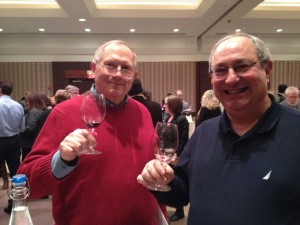
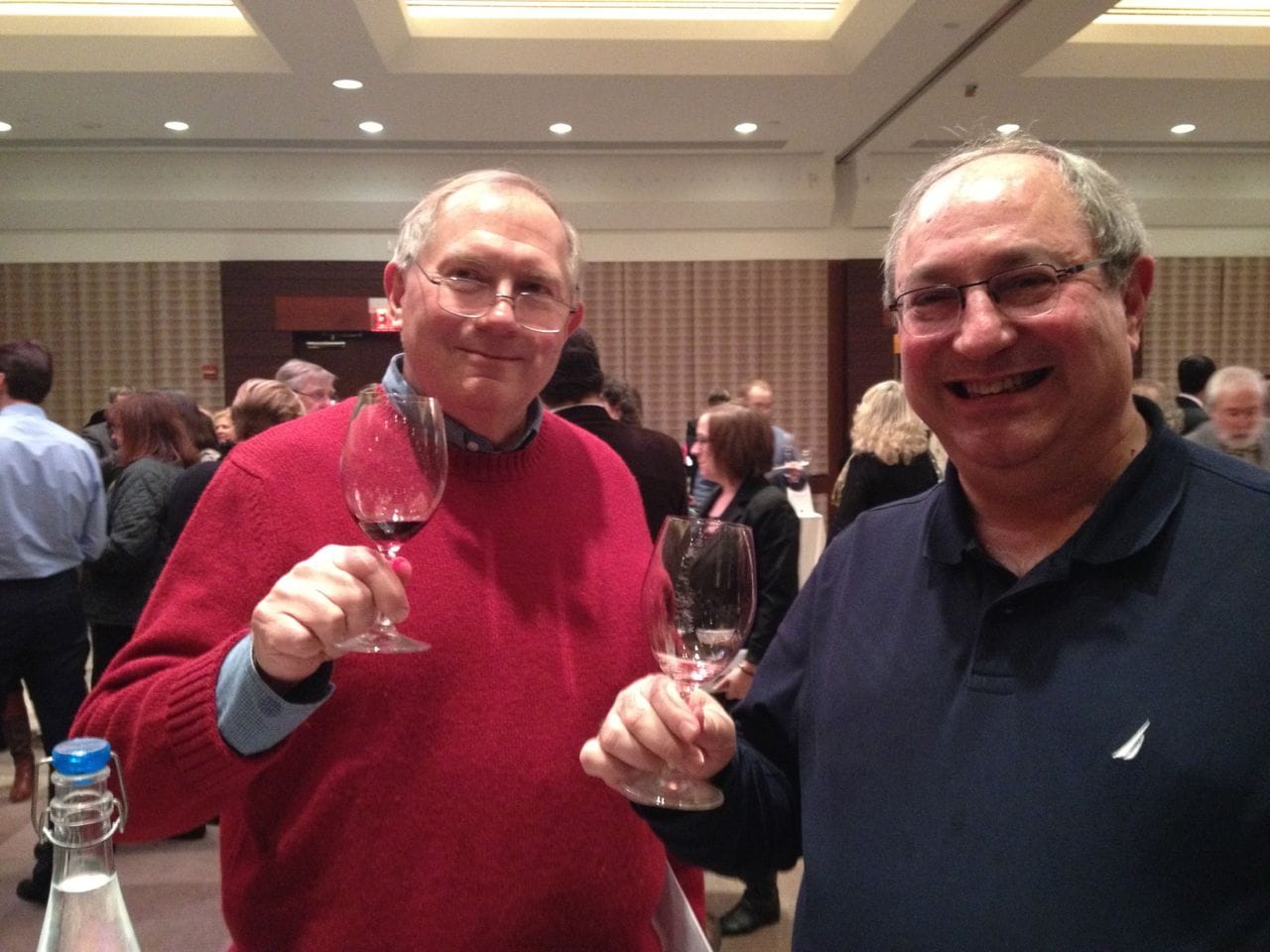
Washington D.C. based tasting friends Randy McFarlane (left) and Howard Cooper, assessing Bordeaux 2011 from bottle
To be fair, some wines were better than expected. Interesting that some of the more so called modern styled wines excelled in 2011. Perhaps they could not go that far and the lengths they went to brought up succulence and flavor that was needed in this vintage, too often marked by attenuated and/or drying finishes. Estates that “played it safe” either came up with some decent wine for short term drinking (La Louviere, Maucaillou, Tour de By) or ended up being rather boring (Cantenac Brown, La Tour Carnet, Grand Puy Ducasse).
The key here is pricing. Many estates lowered prices but not enough to excite the trade, especially in more traditional markets, which had already felt very annoyed by the price peaks realized in 2010… So not many merchants bought any 2011 en primeur. Certainly the importer/retailer that helped organize the tasting for the Union de Grands Crus de Bordeaux (UGCB) – Calvert Woodley – did not buy much at the time of release.
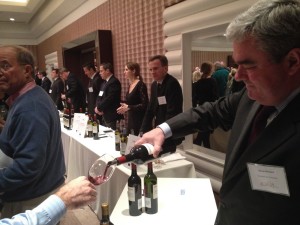
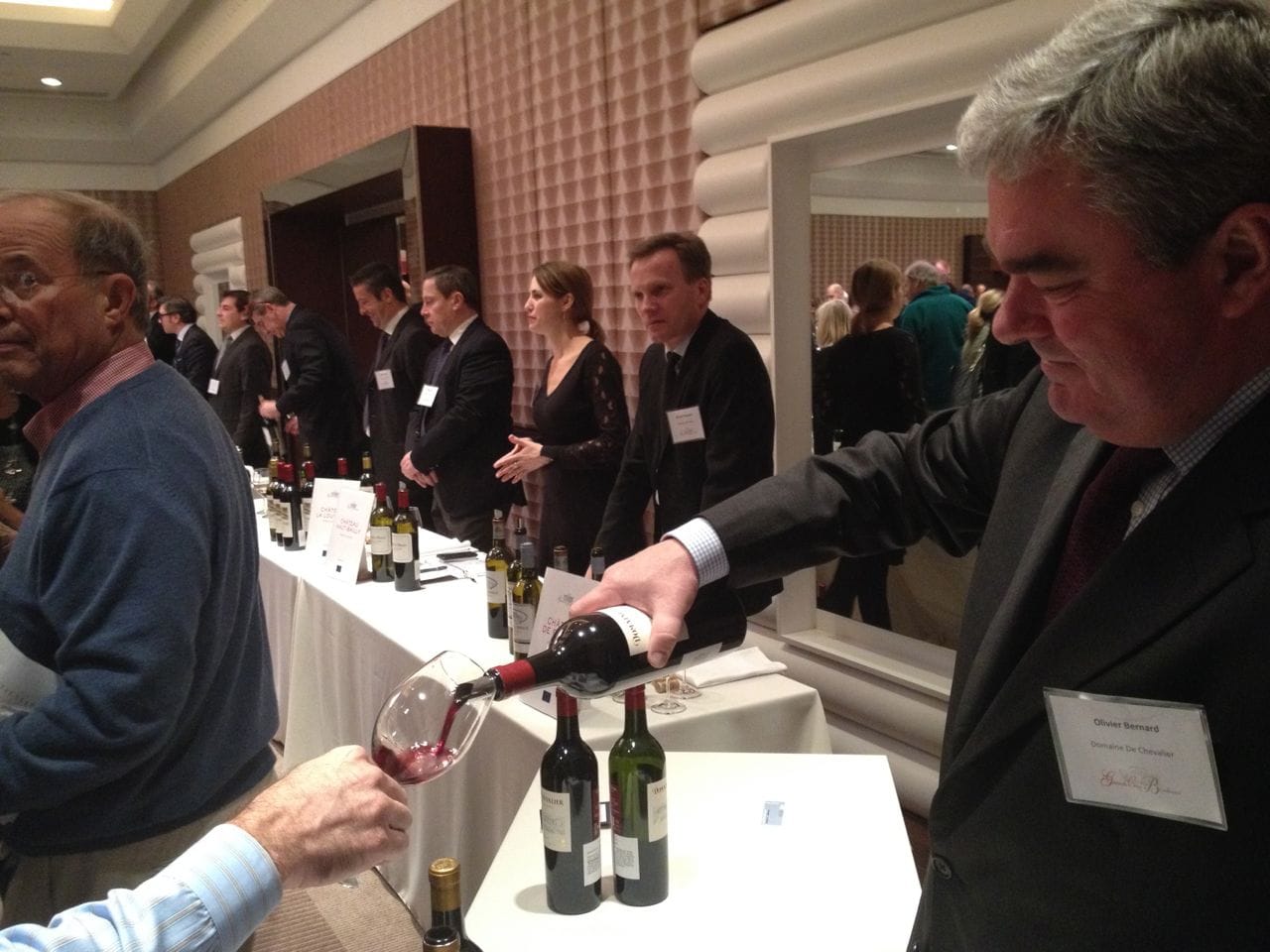
Olivier Bernard pouring some of his excellent red Domaine de Chevalier, but his white proved to be my absolute favorite of all 60 wines at the tasting
But for those who say that Bordeaux is passé, I can only indicate a packed house for this 3 to 6 pm tasting on a weekday in Washington D.C. Not the easiest time to come.Many people I spoke to said that they took a half day off work to come, so for an off vintage, Bordeaux has popularity. A positive sales indication is that Calvert Woodley included a price sheet for most bottles tasted – some 53 chateaux members of the Union des Grands Crus de Bordeaux were represented. And important nation wide merchants like Total Wine certainly bought 2011s. “I like the pricing discounts on some of these wines,” proclaimed Total Wines representative Cyrus Hazzard at the tasting. And there was much discussion among tasters – from the trade or not – about the merits and demerits of the vintage.
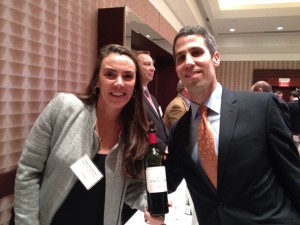
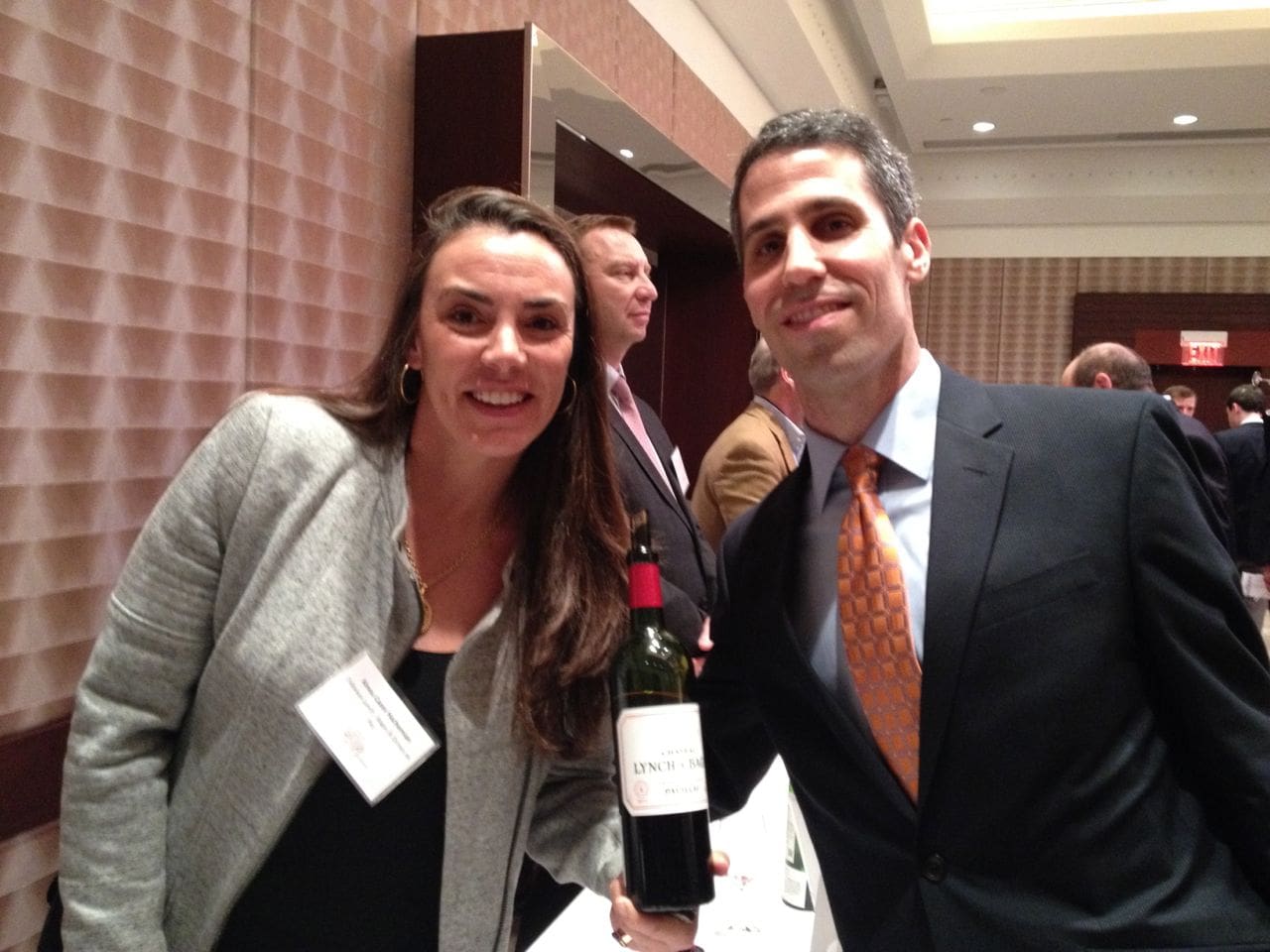
Kinou Cazes-Hachemian of Chateau Lynch Bages with Michael Sands of Calvert Woodley
For the most part, many of my impressions from barrel back in 2012 were reflected in this from bottle tasting. Underrepresented, Pomerol did well. The whites from Graves were perhaps the best, and indeed my highest scoring wine was Domaine de Chevalier white.
Interesting to note that Olivier Bernard, president of the UGCB, organised travels this year so that not all members travel to the same places at once. So instead of all members being in Washington D.C. on 17 January, others were doing a tasting at St John in the Virgin Islands, which explains the absence of some estates such as Leoville Barton or Grand Puy Lacoste. I will try to taste these “missing estates” in Duesseldorf, Germany in March this year.
One added note, thanks to Chris Kissack, I was reminded that UGCB tastings do indeed offer “a very blunted view of any vintage” because appellations are not thoroughly represented. This was particularly the case in Washington D.C. because far fewer members were showing their wines.
Finally, I use scores somewhat begrudgingly. It is not easy to assign a number to a wine, taking into consideration so many factors for Bordeaux: stylistic differences, price/quality ratios, under (or over) performance and my subjective tastes. So please pay more attention to the notes than to the numbers :-).
Wines in bold I liked in particular. Red and bold, even more. When underlined, too, the most.
White Graves and White Pessac Leognan
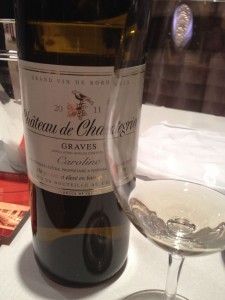
A solid dry white Bordeaux from 2011 that costs not a pretty penny!
Likely the most consistent appellation in Bordeaux in 2011.
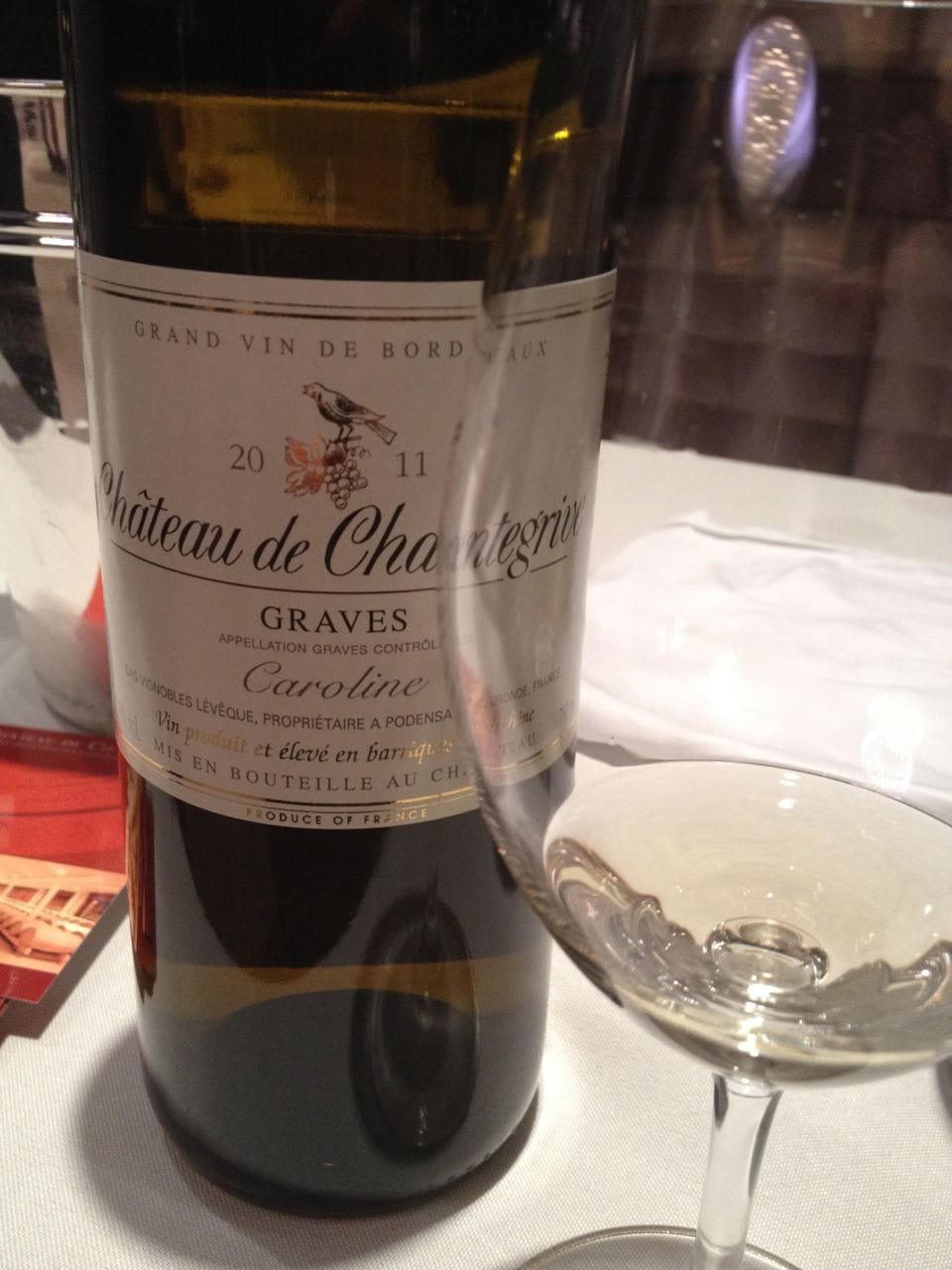
- 2011 Château de Chantegrive Cuvée Caroline – France, Bordeaux, Graves
- An illustration of why whites in 2011 were generally successful, this wine combined a rather brisk entry with a richer mid palate that lead to a clean if somewhat jagged finish. But the price is very right and I would buy it for fish or chicken, to take two general examples. (88 points)
- 2011 Domaine de Chevalier Blanc – France, Bordeaux, Graves, Pessac-Léognan
- My en primeur tastings confirmed here. Yet again Domaine de Chevalier proves itself as being among the top tier whites produced in all of Bordeaux. Medium to full bodied, with energy. Very focused, mineral, citrus and ripe yet not thick. Pristine comes to mind, with rounded richness around the linear line of flavor that results in a long and pleasing finish. Potential for a higher score, if you follow the numbers. These wines are built to last, as I had experienced in an all-white vertical reaching back to the 1970s in November 2013 in Merano Italy with owner Olivier Bernard. (95 points)
- 2011 Château La Tour-Martillac Blanc – France, Bordeaux, Graves, Pessac-LéognanVery brisk and high toned, with notes of pear and lime. But was it over steely? Look, I love mineral driven wines that do not depend of ripeness and fat to impress – well, I do sympathize with the Anti Flavor Elite :-). But this one is almost for ascetics. Tasting along with me was none other than famous Virginia winemaker Rutger de Vink who agreed, dubbing it “edgy.” I really like what owner Tristan Kressmann – http://www.youtube.com/watch?v=7hmqhCqpoBo – has been doing at this estate and generally love his whites – I bought a six pack of his 2010 for example. But I wonder if the 2011 is too steely for its own good? Will it stand the test of time? The prices are good, so worth a try. (89 points)
- 2011 Château Carbonnieux Blanc – France, Bordeaux, Graves, Pessac-LéognanHere we have a rather strong buy recommendation, as this estate is not an “investment wine” and proposes regular pricing, en primeur for about 16 euros release price, and that was for 2010 as well as for 2011… This combined both richness and briskness nicely, with a medium plus body and a medium long finish. (90 points)
- 2011 Château La Louvière Blanc – France, Bordeaux, Graves, Pessac-LéognanOnce again, La Louviere delivers the good – in white and in red. For this white, muted citrus flavors and red apple on the attack precede a rather succulent mid palate, which leads to a short but pleasant finish. A good wine, indeed when taking (low) price into account. (90 points)
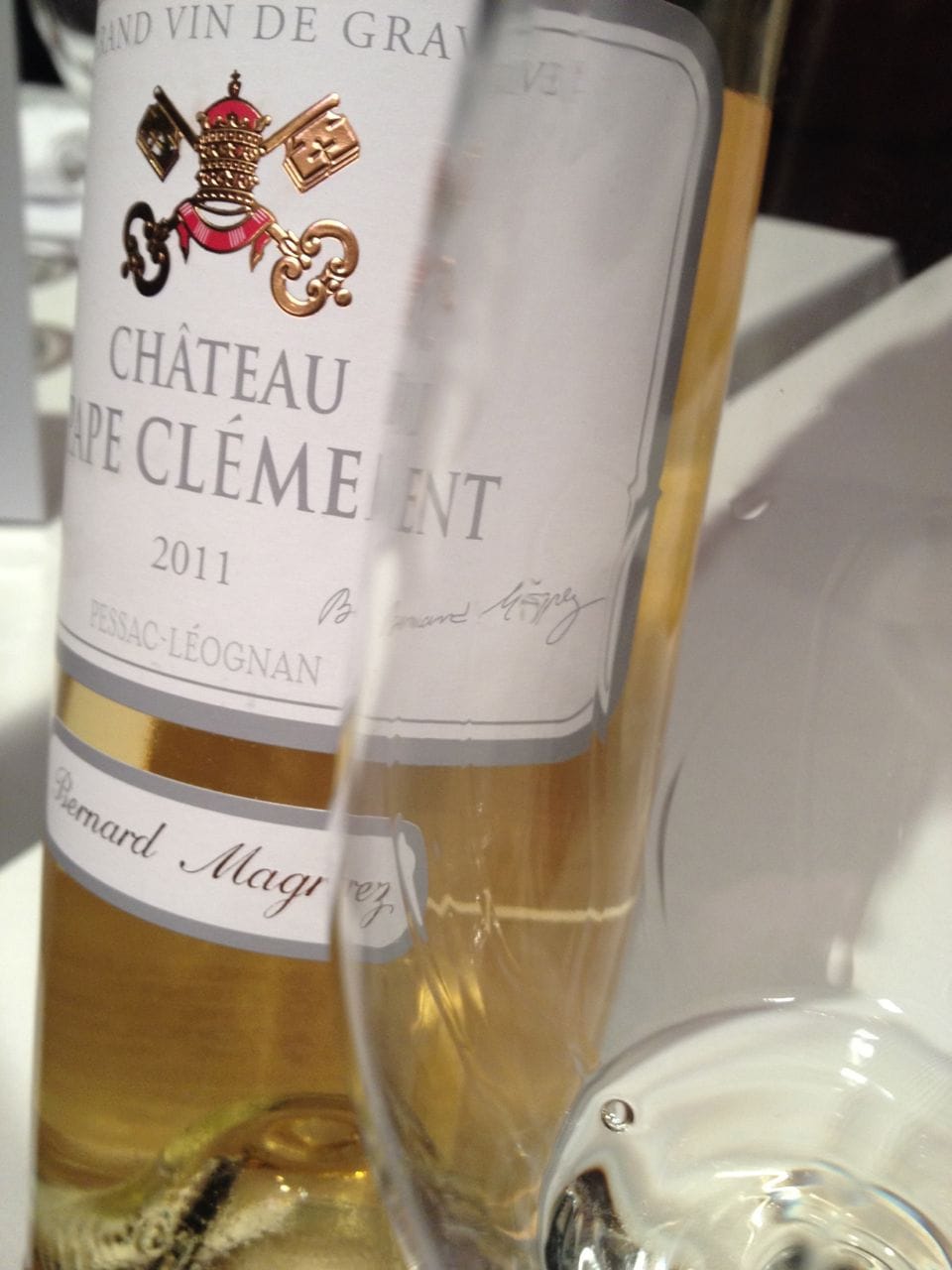
- 2011 Château Pape Clément Blanc – France, Bordeaux, Graves, Pessac-LéognanAs you can read HERE this wine is better from bottle than from barrel. Cyrus Hazzard of Total Wine, also at the tasting, loved the opulence. I did, too. The wine seems to have “come together” becoming more cohesive, combining adequate acidity to balance the ripe apricot and somewhat exotic fruit richness. A special bottle, although I do not believe that it will last as long as the Domaine de Chevalier Blanc – another style altogether. Still, for lovers of opulent whites, this is your ticket to be sure! (93+ points)
- 2011 Château Olivier Blanc – France, Bordeaux, Graves, Pessac-LéognanA bit of a let down from what I had experienced from barrel, expecting more from Olivier in blanc in 2011 –
http://connectionstowine.cavendoclient.com/bordeaux-2011/choose-carefully/#PessacLeognan. Not bad, mind you. There was an intriguing mint freshness from this wine, but also a slightly metallic finish that detracted. (90 points)
- 2011 Château Smith Haut Lafitte Blanc – France, Bordeaux, Graves, Pessac-LéognanFine evolution in bottle and echoing more or less the feeling I got from the wine from barrel in 2012 (http://connectionstowine.cavendoclient.com/bordeaux-2011/choose-carefully/#PessacLeognan). Although it was a bit too cold when served, I could sense the balance between richness of fruit and acidity. It was clean, a touch plump (lacking the streamlined precision of Domaine de Chevalier) but just very elegant overall on the finish. A success. (92 points)
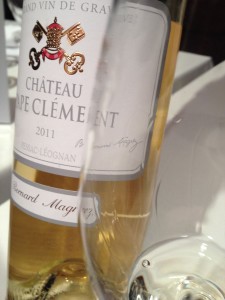
A darn good white Pape in 2011!
Red Graves and Pessac Leognan
We are starting to get a bit patchy, but a candidate for most consistent dry red appellation from Bordeaux in 2011.
- 2011 Château de Chantegrive – France, Bordeaux, GravesTaking no risks, this wine came across as medium bodied, with a somewhat thin mid palate marked by a touch of metallic but also with pleasing cranberry notes, more on a red fruit register than black. For the price, not bad at all. (87 points)
- 2011 Château Carbonnieux – France, Bordeaux, Graves, Pessac-LéognanA noticeable step up following Chantegrive. Eric Perrin explained that their Cabernets were “very ripe” albeit a small harvest. He said that for his terroir, the Cabernet was better than Merlot. This blend of 70-30 Cab-Merlot displays medium concentration and medium body, with a fine palate texture and a rather smooth albeit short finish. There is a certain elegance about this wine that makes it quite endearing. (88+ points)
- 2011 Domaine de Chevalier – France, Bordeaux, Graves, Pessac-LéognanSurprise? Not really. Owner Olivier Bernard has been fashioning some great reds from his estate, that has been better known for its whites. As I had tasted in a blind vertical a couple of years ago at the estate, he can make lovely reds in difficult vintages and this one is no exception. If the price is right, which I hope it would be for most readers, this is a buy. Fine concentration, medium plus body, sap and energy if not super bright, which would come from a better vintage. Still, this was among the best reds I had among the 50 or so I tried in Washington D.C. on 17 January 2013. (92 points)
- 2011 Château Haut-Bailly – France, Bordeaux, Graves, Pessac-LéognanMy tasting of this wine at Vinexpo is confirmed albeit a slightly better showing. http://connectionstowine.cavendoclient.com/vinexpo-2013/haut-bailly-15-years/. Here in Washington D.C. I get more refinement and mid palate sap, plus a burgeoning richness reflected perhaps in the larger- than-usual proportion of Merlot (some 47%). A somewhat short finish however brings back memories of 2007. Give it time in bottle with potential for upward scoring. (91 points)
- 2011 Château La Tour-Martillac – France, Bordeaux, Graves, Pessac-LéognanThis I had actually tasted at Smith Haut Lafitte at a holiday season party and celebration of the end of the harvest in December 2013. It displayed fine sap and concentration and displayed pleasing mid weight palate presence, albeit a slightly short finish. But the price is right. (90 points)
- 2011 Château La Louvière – France, Bordeaux, Graves, Pessac-LéognanWhat can I say? La Louviere tends to be a very consistent wine that delivers medium body, ripe red or black fruit depending on the vintage. Here it is more black, but not of low intensity. The team got the right level of extraction and picked ripe grapes with good acidity. I must put this in a restaurant category. If not too expensive, do not hesitate. (89 points)
- 2011 Château Olivier – France, Bordeaux, Graves, Pessac-LéognanI am not sure if a note of cardboard seemed to indicate a flaw, but it seemed to dissipate. Disassociating that note, I detected mid level concentration, fine sap on the mid palate but a bit of drying tannin on the finish. Tasting through these wines fairly quickly, so I wonder if this was indeed simply a faulty bottle. ??
- 2011 Château Pape Clément – France, Bordeaux, Graves, Pessac-LéognanWhat’s going on here? The nose offers much promise of red and black fruit and you may think that this wine would have some freshness. The attack is decent and the mid palate of medium plus body. But it ends up being an over extracted mess, with far too much drying on the finish. I could be wrong here, but my experience tasting it in Washington D.C. was not too positive – certainly worse than the from barrel tasting in 2012… (87 points)
- 2011 Château Smith Haut Lafitte – France, Bordeaux, Graves, Pessac-LéognanWell, here we have a red that starts out just fine, with a cocktail of fruit red and black – and ripe. The mid palate is juicy and conveys a bit of spice from the oak I suppose, but nicely integrated. All is well until the somewhat drying finish that is medium. Considering the vintage, SMH did a good job here. (91+ points)
- 2011 Château de France – France, Bordeaux, Graves, Pessac-LéognanMore body than, say, Chantegrive, but lacks the symmetry of Carbonnieux. What I mean is that while the attack – and the aromas – offer initial promise, I sense a certain metallic quality and drying tannin on the finish that perturbs a bit. I hope to try this again in Strasbourg in February 2013. (86 points)
Saint Emilion
Some of the more modern styled wines actually excelled in 2011, bringing an extra bit of flavor and succulence in the mix.
- 2011 Château Beau-Séjour Bécot – France, Bordeaux, Libournais, St. Émilion Grand CruThis has chutzpah. And I like it better from bottle than from barrel. Certainly a plump and somewhat modern style, but a very good one. The Merlot driven succulence (about 70% Merlot) comes to the fore. A pleasing and supple attack leads to a rich and pleasing medium bodied palate. Just slightly drying on the finish, which is abbreviated, gives the vintage away. (91 points)
- 2011 Château Canon – France, Bordeaux, Libournais, St. Émilion Grand CruA success for the vintage and I was not surprised. There is a lovely harmony to this wine – perhaps understated or “playing things close to the vest” but one of the least aggressive or drying of all the reds. The attenuated nature of the vintage is detected in the short finish but the attack and mid palate are refined and fresh, with a ripe red fruit basket that invites further drinking. Enough tannic structure to ensure medium term aging as well. (92+ points)
- 2011 Château Canon-la-Gaffelière – France, Bordeaux, Libournais, St. Émilion Grand CruWhat can I say? I liked this en primeur – http://connectionstowine.cavendoclient.com/bordeaux-2011/choose-carefully/#SaintEmilion – and loved in from bottle. This is rich and flavorful and succulent and one of my favorite reds of the tasting in Washington D.C. The wine may be modern in style but somehow it all came together nicely in 2011. Sure, the finish is not very long, but everything else is, well, quite delicious. If the price is right and you like Canon La Gaffeliere, purchase this one for shorter term drinking while your more age worthy vintages sleep in your cellar! (92+ points)
- 2011 Château Figeac – France, Bordeaux, Libournais, St. Émilion Grand CruPouring me the first vintage of Figeac under the supervision of Michel Rolland, technical director Frédéric Faye reiterated his invitation to come over and see the team. I have always loved Figeac and am not sure how the wine will change over time (see this article: http://www.decanter.com/news/wine-news/583758/rolland-vows-to-take-figeac-into-st-emilion-premier-league) but with Faye pouring, I must say that this 2011 was darn good. A break from the past was that the percentages changed: 40 per cent Merlot and 40 percent Cabernet Sauvignon, with less Cabernet Franc than usual… Good structure, mid palate concentration, pleasing tobacco leaf hints, a touch drying on the finish, but that may well be just the vintage character. (92 points)
- 2011 Château Troplong Mondot – France, Bordeaux, Libournais, St. Émilion Grand CruI liked this more from bottle than from cask. Rich and savory and oak derived spice, not too far from the succulence of the Canon La Gaffeliere, but the finish was noticeably drying. In any case, I think lovers of this style will find their bonheur. (90 points)
- 2011 Château Franc-Mayne – France, Bordeaux, Libournais, St. Émilion Grand CruThis was somewhat boring. I think Franc Mayne can make great wines, but perhaps the vintage overtook them? The attack is low key, the mid palate of medium intensity with some pleasant red fruit, and the finish attenuated. (87 points)
- 2011 Château Trotte Vieille – France, Bordeaux, Libournais, St. Émilion Grand CruLots of Cabernet Franc, almost 50%. But I did not get any wow impression. It was tasty and of moderate intensity, and well made, but lacking excitement. Perhaps this just needs time to sleep in the cellar? (88 points)
Pomerol
Under represented by the UGCB, but overall pretty good and illustrates why some consider Pomerol the best dry red appellation in Bordeaux from 2011.
- 2011 Château Beauregard – France, Bordeaux, Libournais, PomerolLike the two other Pomerols at the Washington D.C. tasting, this wine performed better from bottle than it did from barrel. Fine red fruit aromatics precede a supple attack and a medium bodied and suave mid palate. The finish is just a bit chopped however, indicating the vintage’s limitations. (90 points)
- 2011 Château Le Bon Pasteur – France, Bordeaux, Libournais, PomerolA far better performance from bottle when compared to my experience tasting it from barrel in 2012, this was succulent and ripe and, well, delicious from the attack to the mid palate. Too bad that there was a bit of heady alcohol on the finish with some drying, but – this is splitting some hairs. We are talking about a wine that has that style in mind and for the vintage, I say it merits a success. (91 points)
- 2011 Château Gazin – France, Bordeaux, Côtes de BourgPerhaps my favorite among the three Pomerols in Washington D.C. While more subdued than the Le Bon Pasteur, it seemed to convey more harmony and balance through to the finish – and showed a marked improvement from what I had tasted from barrel (a good sign, or perhaps a sign that I was not tasting so hot in 2012 :-)). In any case, I think prices are not too high for Gazin in 2011, and would advise those who do not have that much Bordeaux in their cellars, or who are just starting to get into Bordeaux, to purchase a few of these, A good example of why some consider Pomerol to be the appellation of the vintage. (92 points)
Haut Medoc/Moulis
Did not get a chance to taste but three from the choices here. By the time I got to these wines, La Lagune was gone, for example… Anyway, nothing to exciting here, but some fine price/quality ratios.
- 2011 Château Maucaillou – France, Bordeaux, Médoc, Moulis en MédocA frank attack, a rather polished mid palate and a certain juicy lift on the finish. This is inexpensive and good. (88 points)
- 2011 Château La Tour Carnet – France, Bordeaux, Médoc, Haut-MédocRich yet drying on the finish. Sure some tasters will focus on the richness, and why not? But I just think that its price tag should also include a more pristine finish… (87 points)
- 2011 Château La Tour de By – France, Bordeaux, MédocPromising fruit driven nose, with some pleasant oak derived spice at this stage precedes a midweight palate marked by fine sap. The length is medium minus but the price is right… (89 points)
Margaux
A mixed bag appellation and the best were missing (no Rauzan Segla, for example, or Brane Cantenac or Giscours)…
- 2011 Château Cantenac Brown – France, Bordeaux, Médoc, MargauxThe nose promised some fine fruit and ripe notes. The attack started strong but the palate was fleeting and ended with drying tannins. (87 points)
- 2011 Château Desmirail – France, Bordeaux, Médoc, MargauxA little known estate that pulled more than its weight in 2011. Fine juiciness throughout if inoffensive and perhaps over polite, but what can you do with the challenges of the harvest? They did well. (88 points)
- 2011 Château Kirwan – France, Bordeaux, Médoc, MargauxTCA taint noticeable. (NR/flawed)
- 2011 Château Lascombes – France, Bordeaux, Médoc, MargauxWell, well, well. Better from bottle than it was from barrel although not really my style. As Ben Giliberti noted, he liked it more than usual (we share similar tastes). Rich and succulent from the beginning but you do get the oak treatment! It would be nice for the estate to tone that down a bit, and then you would get a better wine (at least for my palate). (88 points – more if you like the style)
- 2011 Château Siran – France, Bordeaux, Médoc, MargauxThere is a silkiness to this Siran that is endearing. OK, a bit of drying detracts on the finish, but it is not over extracted. Just a vintage nature and probably good for earlier drinking! (88 points)
Saint Julien
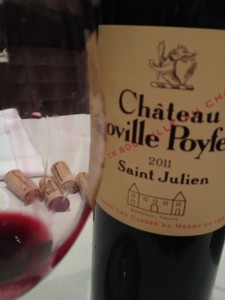
A most savory Leoville Poyferre in 2011
All are good here, and Saint Julien is known for being consistent even in off vintages. I thought so from barrel – http://connectionstowine.cavendoclient.com/bordeaux-2011/choose-carefully/#Saintjulien and think again, too, after tasting these five examples.
- 2011 Château Branaire-Ducru – France, Bordeaux, Médoc, St. JulienI rather like this from barrel and – knowing the estate style rather well – I suspect it is simply closed down now. There is a suave palate freshness one expects with ripe enough red fruits and a tonic if somewhat austere finish that I had noted from barrel, but more closed down from bottle. Hence my rather cautious note, but potential for upside. (90 points)
- 2011 Château Lagrange (St. Julien) – France, Bordeaux, Médoc, St. JulienWhat a nice surprise. What smoothness and pleasingly noticeable sap! The finish does feel somewhat pinched – a detraction – but I just love the mid palate so much that had to give it a 91! (91 points)
- 2011 Château Gruaud Larose – France, Bordeaux, Médoc, St. JulienInteresting! I had done a vertical in Duesseldorf for a wine shop there called Wine Live a few years back, for ProWein (German international wine fair). And this 2011 really falls into the category of 2007, but better. Gruaud Larose 2007 is quite elegant and refined but lacks power. The 2011 was gentle and smooth with fine aromatics on the attack through to a somewhat spicy mid palate, medium bodied. Not edgy or angular (charming comes to mind) but somewhat tight on the finish. Good, and certainly not great. (90 points)
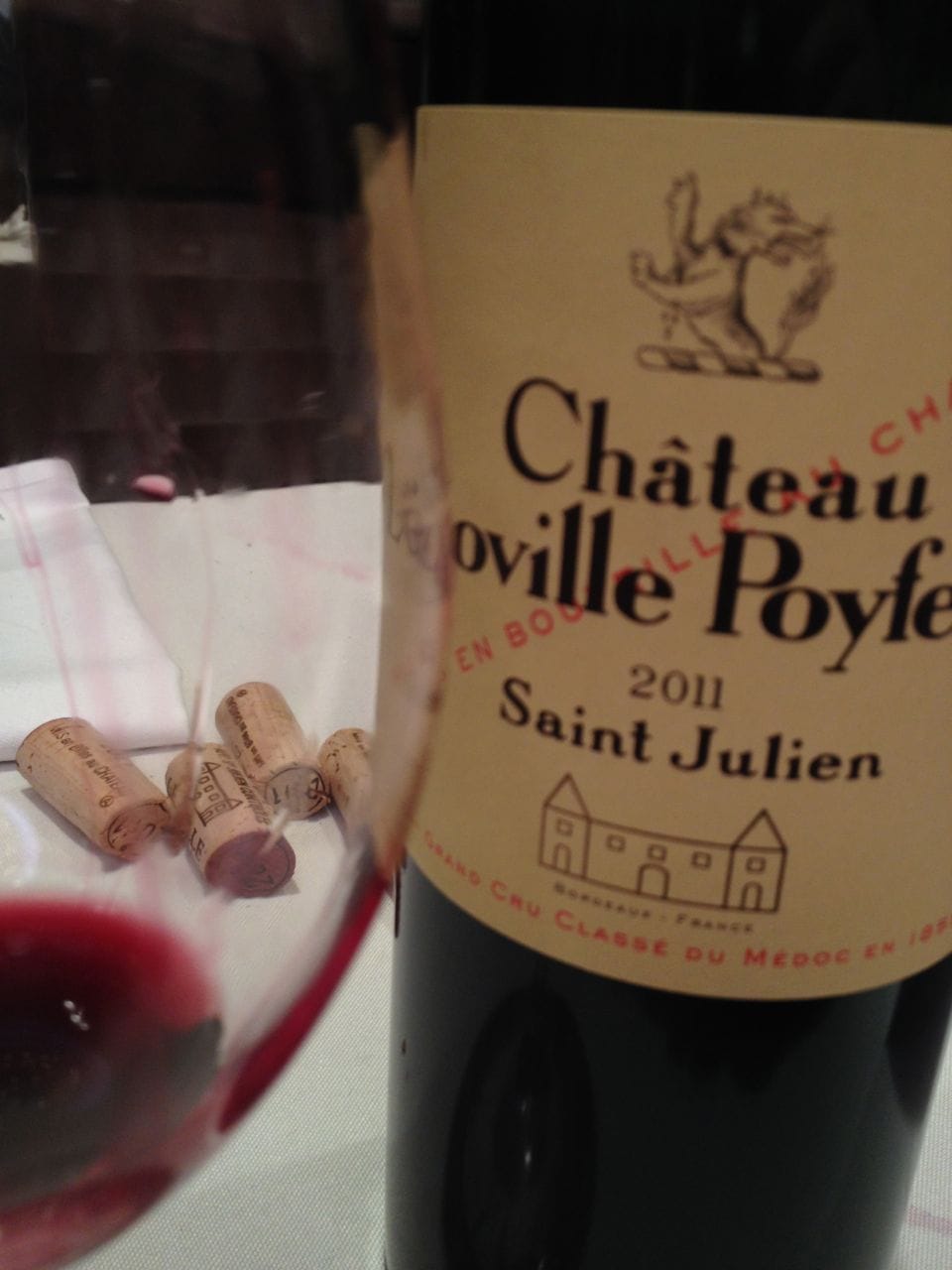
- 2011 Château Léoville Poyferré – France, Bordeaux, Médoc, St. JulienLeoville Poyferre can really kick ass in off vintages. Take the 1999 for example. Well, 2011 is like that: dark fruit succulence, mid palate juice, and a delicious finish. If one want to be picky picky (2011, boys, come on!), then the finish does dry out a bit. But overall, I bet this will provide marvelous short term pleasure as your 09s, 10s, 05s, 03s, and 00s age. (93 points)
- 2011 Château Talbot – France, Bordeaux, Médoc, St. JulienA rather impressive showing from this estate, and better than my experience from barrel. Perhaps a bit muted but there is dark fruit and lead pencil and a certain pleasing hearty aspect on the mid palate, with a smooth and adequate finish. (90 points)
Pauillac
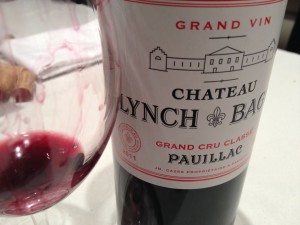
Nice job by Lynch Bages in 2011
Perhaps not as consistent as Saint Julien, but a great performance from Lynch Bages.
- 2011 Château Batailley – France, Bordeaux, Médoc, PauillacNot the strongest showing from this estate, which has been doing very well in recent vintages. A certain underripe aromatic detracts from the start, but the mid palate makes up for this with medium plus body and a Pauillac grip that you expect. The finish has lift, too. Give it time in bottle and it may turn out better with some years aging. (89 points)
- 2011 Château Grand-Puy Ducasse – France, Bordeaux, Médoc, PauillacPut this one in the ho hum category. Yes, it has fruit and spice on the nose, with a certain earthiness, but all seems to muted and, well, a bit boring. You can peer all you want and think that it may be closed or something, but it seems just a bit flat, and with some drying tannin to boot. (87 points)
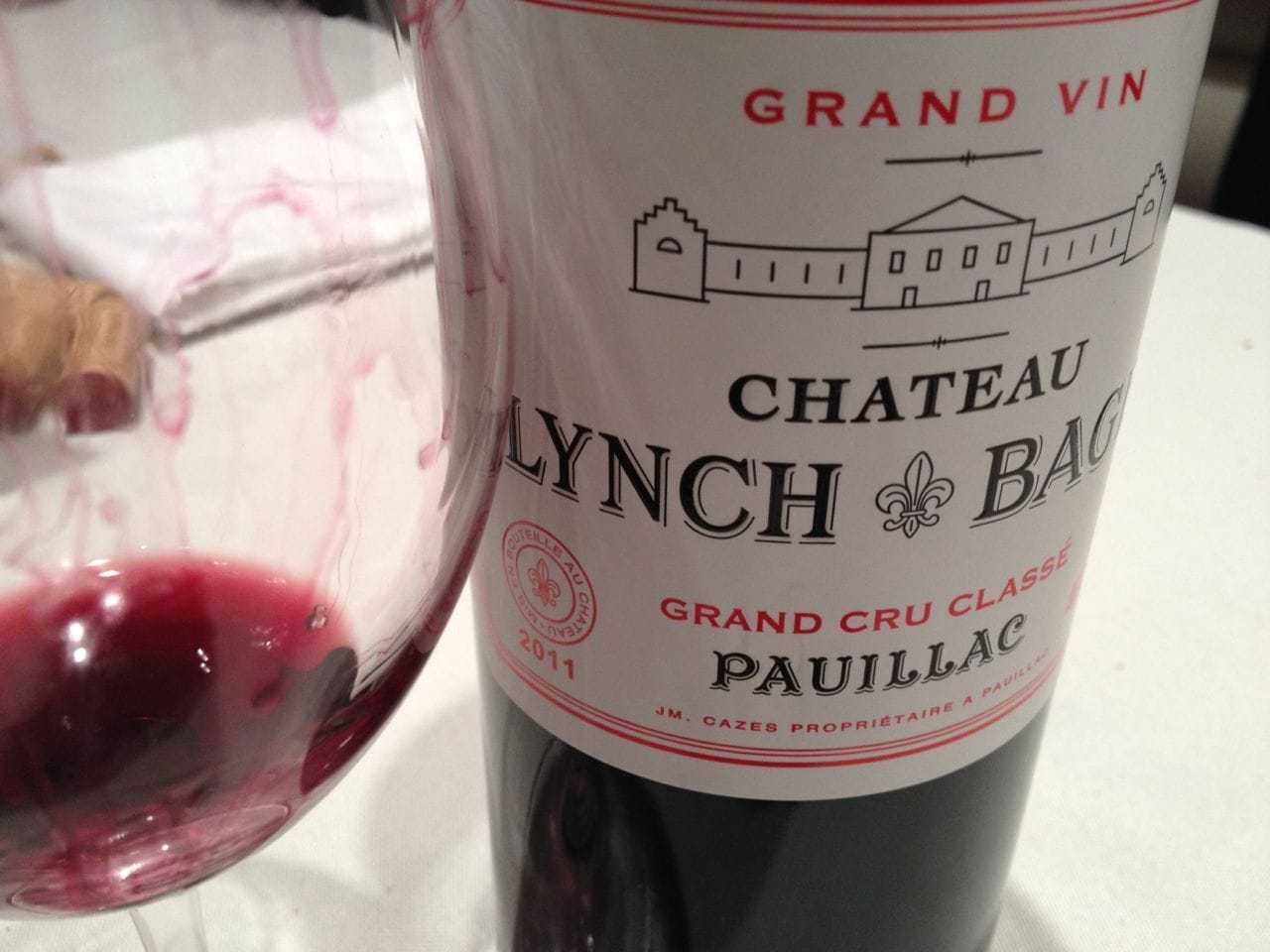
- 2011 Château Lynch-Bages – France, Bordeaux, Médoc, PauillacTop flight Lynch Bages. I liked Pauillac in general in 2011, and this wine does not disappoint. OK, a touch drying on the finish but that is splitting some hairs. Veritably full bodied, this wine displays succulence and power, what one can expect from a quality estate like Lynch Bages. In recent vintages, I have decried a certain later picking and oak extraction, but 2011 seems to be marked by balance. (92+ points)
- 2011 Château Pichon Longueville Comtesse de Lalande – France, Bordeaux, Médoc, PauillacNot sure about this one here. I generally adore the Comtesse, but feel like the green pepper aspect is almost too present. Some could interpret it as herbal, but I think we have some underripe tannin. What makes me hope for the future is that the mid palate is juicy and the texture is finely grained and displays elegance one expects, but I think that they did a better job in, say, 2008. This does remind me of 2007! (91 points)
Saint Estephe

With Jennifer Legge of Calvert Woodley (left) and Stacey Orozco of Balzac Communications
An under representative sample.
- 2011 Château Les Ormes de Pez – France, Bordeaux, Médoc, St. EstèpheStarts out rich and flavorful and thus not bad at all. But like other reds in 2011, ends drying and attenuated on the finish. 2007 redux. (87 points)
- 2011 Château Phélan Ségur – France, Bordeaux, Médoc, St. EstèpheThis one is a better Saint Estephe as it displays more sap and energy. Just barely 90, if you will, because the finish is no great shakes, but this has medium plus flavor intensity and a robust palate. Fits the bill. Get me a steak. (89+ points)
Sauternes
I think that Sauternes was patchier in 2011 than some people have said…
- 2011 Château Bastor-Lamontagne – France, Bordeaux, Bordeaux ContrôléeI did not really like this from barrel and that sentiment is echoed from bottle. While there is some verve on the finish, albeit muted, what bugged me is a cloyingly sweet palate, but I suppose some tasters who seek richness at all costs would like it more. (88 points)
- 2011 Château Lafaurie-Peyraguey – France, Bordeaux, Sauternais, SauternesNot sure what to think. I found it a bit over sweet, yet again. And this is reflected in my notes from barrel. It is not bad, mind you. 2011 was generally quite good for Sauternes but some may have been too sweet for their own good. (90 points)
- 2011 Château de Rayne-Vigneau – France, Bordeaux, Sauternais, SauternesWell, now, I really liked this from barrel and the feeling from bottle is the same. An excellent showing that may merit a higher score with time in bottle. Why? The palate has lots of energy, salty freshness and zing. With lovely botrytis derived notes of black tea, orange peel in cinnamon. I would have given it a higher score if it were not for a somewhat thin finish, but overall I love the elegance and freshness. (92 points)
- 2011 Château de Fargues – France, Bordeaux, Sauternais, SauternesI liked this more than I did from barrel. A somewhat lower note perhaps than one would expect because I did find it somewhat over sweet. Let’s put it this way: the opulence on the nose and on the attack – with apricots and pineapples and spice – could have used more zing on the palate… Still, I could see this wine’s appeal. (91 points)
UGCB on USA tour in January 2014
To conclude, I would say that you cannot go wrong with certain dry whites from Bordeaux in 2011.
For the Sauternes/Barsac, I still think it is a patchier vintage than some believe, so choose carefully – although this was hardly a representative sample, and Yquem was brilliant as were the two Doisys for example.
For most reds, it is a short to medium term drinking vintage. Some performed better than others, and some may surprise us down the road. No surprise that 2011 is not a super vintage, but some reds can find their places in your cellar.